

In cell culture work, a CO₂ incubator is often treated as standard equipment, but in practice it plays a much bigger role than many people expect. Small variations in temperature or gas control can easily affect cell growth, morphology, and long-term reproducibility. That is why understanding how a CO₂ incubator works is important before comparing models or prices.
Basic Working Principle of a CO₂ Incubator
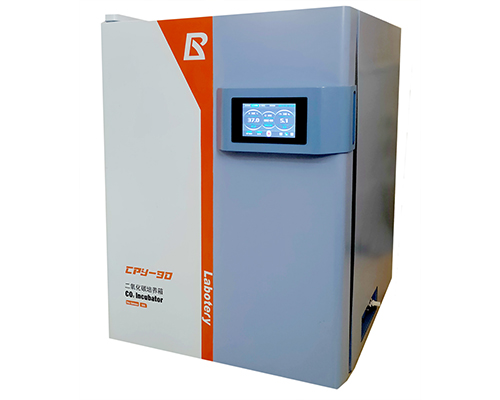
A CO₂ incubator maintains a controlled environment that mimics in-vivo conditions. Most mammalian cells require a stable temperature around 37 °C, high humidity, and a defined CO₂ level, usually close to 5%.
The CO₂ is not added randomly. It works together with bicarbonate-buffered media to stabilize pH. When CO₂ levels drift, even slightly, the culture medium can become more acidic or alkaline. For sensitive cell lines, this change is often enough to slow growth or introduce variability between experiments.
Why Many Labs Choose Air Jacketed CO₂ Incubators
From daily lab experience, temperature recovery matters more than people think. An air jacketed CO₂ incubator surrounds the chamber with heated air, which helps keep temperature uniform and stable.
Compared with direct heating designs, air jacketed systems usually recover faster after the door is opened. In labs where samples are checked frequently, this stability reduces stress on the cells and improves consistency over time.
Stackable CO₂ Incubators and Space Efficiency
Laboratory space is rarely unlimited. In multi-user facilities or growing research groups, stackable CO₂ incubators provide a practical solution. Each chamber operates independently, but the vertical design saves floor space.
For labs handling different incubator cell applications at the same time, stackable systems make it easier to separate projects without adding extra rooms or infrastructure.
Cell Incubator Price: What Are You Really Paying For?
Cell incubator price differences are not only about brand names. Factors such as control accuracy, sensor reliability, chamber materials, and contamination protection all influence long-term performance.
Lower-priced models may be suitable for basic work. However, when experiments depend on consistency over weeks or months, investing in a more stable system often reduces failures and repeat work later.
Selecting the Best Cell Culture Incubator
The best cell culture incubator is the one that fits how the lab actually operates. Fast recovery, stable control, easy cleaning, and reliable operation matter more than having the longest specification list.
For research groups focused on reproducible data, a well-designed CO₂ incubator quietly supports every experiment in the background—and that reliability is difficult to replace.
https://labotrend.com/Incubator/163.html