

University teaching laboratories support experimental courses in materials science, chemical engineering, and environmental monitoring. Equipment selection must balance safety, ease of operation, and educational suitability.
Box-type high temperature resistance furnaces are commonly used for heat treatment, ash determination, and thermal analysis experiments. For teaching purposes, models with a maximum temperature of 1200°C, such as the LX0211 or LX0711, are recommended as they cover most basic experimental needs with moderate chamber volumes suitable for student group work.
Safety is the top priority in teaching laboratories. Furnaces should feature automatic power-off when the door opens, over-temperature alarms, and leakage protection to prevent accidents caused by improper operation. The double-shell structure keeps the exterior surface temperature low, reducing burn risks.
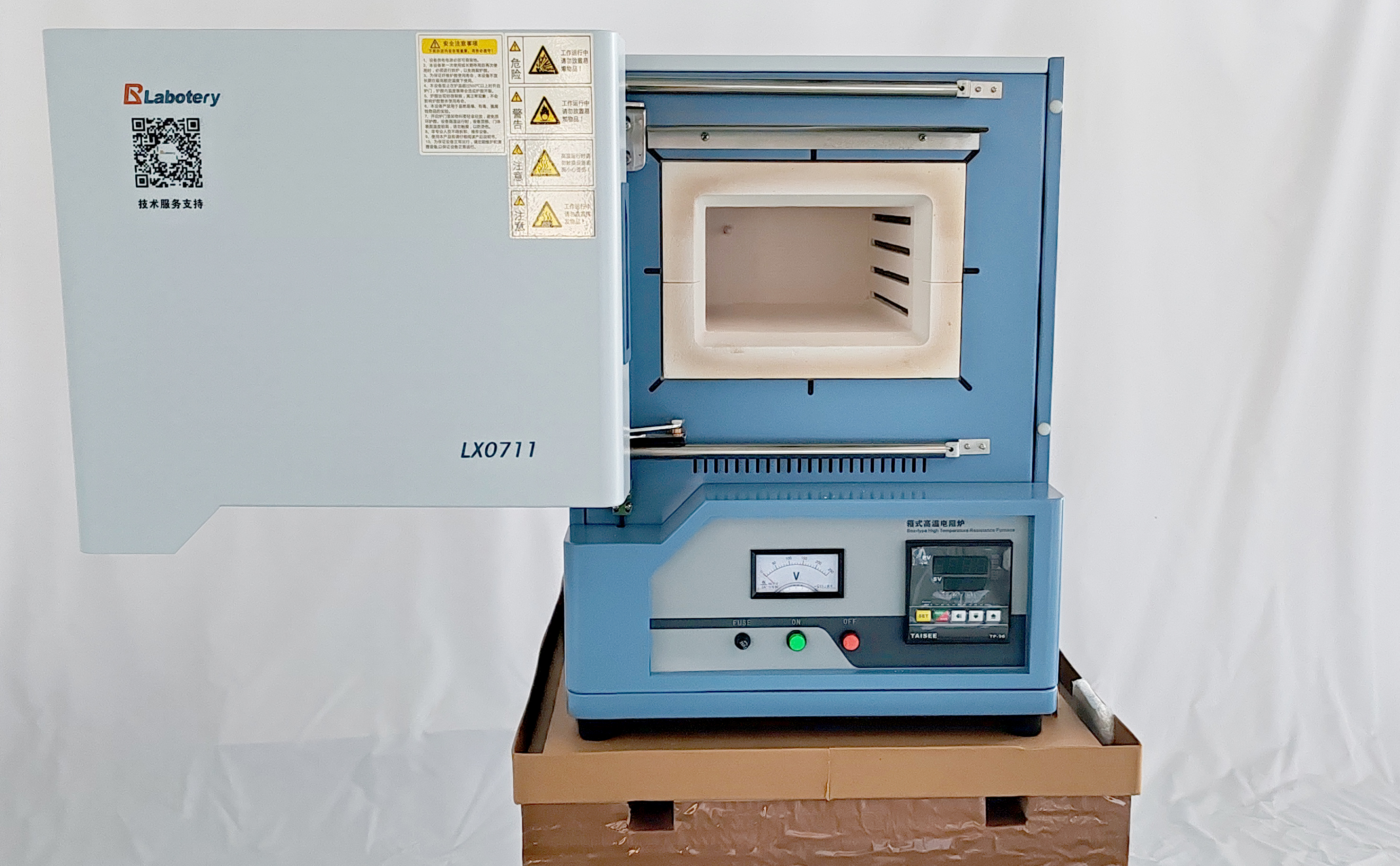
The control interface should be simple and intuitive. Standard LX models use digital displays and button controls, making them easy for students to learn quickly. For advanced students, A-series models with 5-inch touch screens support program setting and data viewing, helping students understand temperature control principles.
Durability is also important due to high usage frequency in teaching labs. Furnaces should be constructed with quality materials, such as polycrystalline mullite fiber chambers for excellent thermal shock resistance and long service life. Electrostatic spray-coated housings resist corrosion and are easyl to clean.
Compact and mobile models with universal wheels and adjustable supports are recommended for flexible laboratory layout adjustments.